
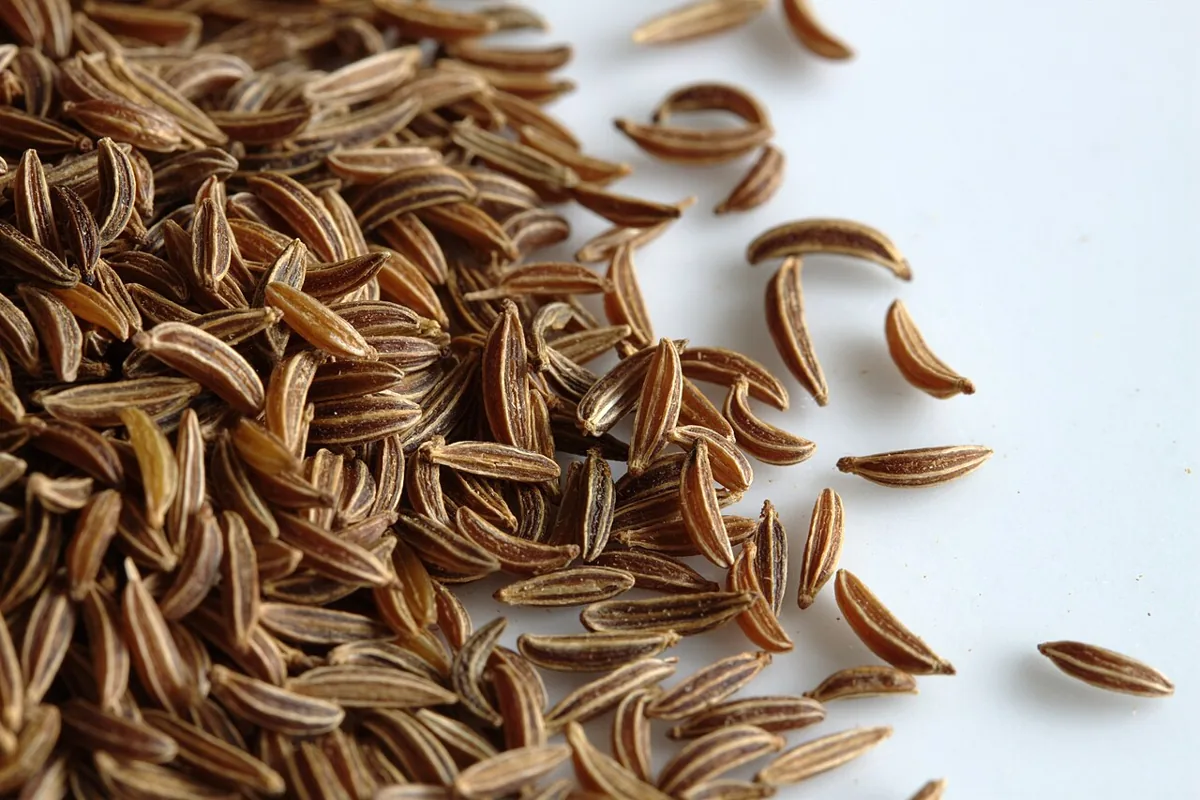
 Available year-round
Caraway Seed Nutrition Facts, Vitamins and Benefits
Caraway Seed (Carum carvi) is included in the Topraktan Bilgiler spice library. Per 100 g it provides approximately 333 kcal and includes 38 g fiber, 689 mg calcium, 16.2 mg iron. Values can vary with variety, ripeness, growing conditions and preparation.
Caraway Seed benefits and place in a balanced diet
- Caraway Seed provides 38 g of dietary fiber per 100 g. Fiber supports normal bowel function and can contribute to fullness as part of a balanced diet.
- A 100 g serving contains about 21 mg of vitamin C. Vitamin C contributes to normal immune function, collagen formation and protection of cells from oxidative stress.
- Its potassium content is approximately 1,351 mg per 100 g. Potassium contributes to normal muscle and nervous-system function and the maintenance of normal blood pressure.
- It supplies about 258 mg of magnesium per 100 g. Magnesium contributes to normal energy metabolism and normal muscle function.
- With approximately 19.8 g of protein per 100 g, it can contribute to total daily protein intake. Protein supports the maintenance and growth of muscle mass.
- It contains about 16.2 mg of iron per 100 g. Iron contributes to normal red blood cell formation and oxygen transport; absorption from plant foods varies.
Caraway Seed nutrition facts
The table covers calories, macronutrients, vitamins, minerals, fatty acids and amino acids where a measured value is available. Values are shown per 100 g and for a 2 g reference serving.
| Nutrient | Per 100 g | 2 g serving |
|---|---|---|
| Core values and macronutrients | ||
| Energy | 333 kcal | 6.7 kcal |
| Water | 9.9 g | 0.197 g |
| Protein | 19.8 g | 0.395 g |
| Total fat | 14.6 g | 0.292 g |
| Saturated fat | 0.62 g | 0.012 g |
| Monounsaturated fat | 7.1 g | 0.143 g |
| Polyunsaturated fat | 3.3 g | 0.065 g |
| Carbohydrate | 49.9 g | 0.998 g |
| Dietary fiber | 38 g | 0.76 g |
| Total sugars | 0.64 g | 0.013 g |
| Ash | 5.9 g | 0.117 g |
| Cholesterol | 0 mg | 0 mg |
| Minerals | ||
| Calcium | 689 mg | 13.8 mg |
| Iron | 16.2 mg | 0.325 mg |
| Magnesium | 258 mg | 5.2 mg |
| Phosphorus | 568 mg | 11.4 mg |
| Potassium | 1,351 mg | 27 mg |
| Sodium | 17 mg | 0.34 mg |
| Zinc | 5.5 mg | 0.11 mg |
| Copper | 0.91 mg | 0.018 mg |
| Manganese | 1.3 mg | 0.026 mg |
| Selenium | 12.1 µg | 0.242 µg |
| Vitamins and vitamin-like compounds | ||
| Vitamin C | 21 mg | 0.42 mg |
| Vitamin B1 (Thiamin) | 0.383 mg | 0.00766 mg |
| Vitamin B2 (Riboflavin) | 0.379 mg | 0.00758 mg |
| Vitamin B3 (Niacin) | 3.6 mg | 0.072 mg |
| Vitamin B6 | 0.36 mg | 0.0072 mg |
| Vitamin B9 (Folate) | 10 µg | 0.2 µg |
| Folic acid | 0 µg | 0 µg |
| Food folate | 10 µg | 0.2 µg |
| Folate, DFE | 10 µg DFE | 0.2 µg DFE |
| Choline | 24.7 mg | 0.494 mg |
| Vitamin B12 | 0 µg | 0 µg |
| Vitamin A | 18 µg RAE | 0.36 µg RAE |
| Retinol | 0 µg | 0 µg |
| Beta-carotene | 206 µg | 4.1 µg |
| Alpha-carotene | 8 µg | 0.16 µg |
| Beta-cryptoxanthin | 16 µg | 0.32 µg |
| Lycopene | 20 µg | 0.4 µg |
| Lutein + zeaxanthin | 454 µg | 9.1 µg |
| Vitamin E | 2.5 mg | 0.05 mg |
| Vitamin D | 0 µg | 0 µg |
| Vitamin K | 0 µg | 0 µg |
| Amino acids | ||
| Tryptophan | 0.244 g | 0.00488 g |
| Threonine | 0.756 g | 0.015 g |
| Isoleucine | 0.826 g | 0.017 g |
| Leucine | 1.2 g | 0.024 g |
| Lysine | 1 g | 0.021 g |
| Methionine | 0.361 g | 0.00722 g |
| Cystine | 0.329 g | 0.00658 g |
| Phenylalanine | 0.867 g | 0.017 g |
| Tyrosine | 0.642 g | 0.013 g |
| Valine | 1 g | 0.021 g |
| Arginine | 1.3 g | 0.025 g |
| Histidine | 0.55 g | 0.011 g |
| Alanine | 0.914 g | 0.018 g |
| Aspartic acid | 2.1 g | 0.042 g |
| Glutamic acid | 3.2 g | 0.063 g |
| Glycine | 1.3 g | 0.026 g |
| Proline | 0.917 g | 0.018 g |
| Serine | 0.946 g | 0.019 g |
| Vitamin details | ||
| Vitamin K1 (Phylloquinone) | 0 µg | 0 µg |
| Fatty-acid details | ||
| EPA | 0 g | 0 g |
| DHA | 0 g | 0 g |
How many calories are in Caraway Seed?
100 g (about 3.5 oz) provides approximately 333 kcal. A 2 g reference serving provides approximately 6.7 kcal. Values vary with variety, ripeness and preparation.
How to use Caraway Seed in the kitchen
Use caraway seed in small culinary amounts to add aroma and flavor. Whole, ground and dried forms can differ substantially in weight and nutrient concentration.
Related spices

Direct USDA records are used where available; closest-profile entries are explicitly labelled and remain approximate. Blank fields mean that the source did not report a value. General information only; not medical advice. Primary composition reference: USDA FoodData Central.