
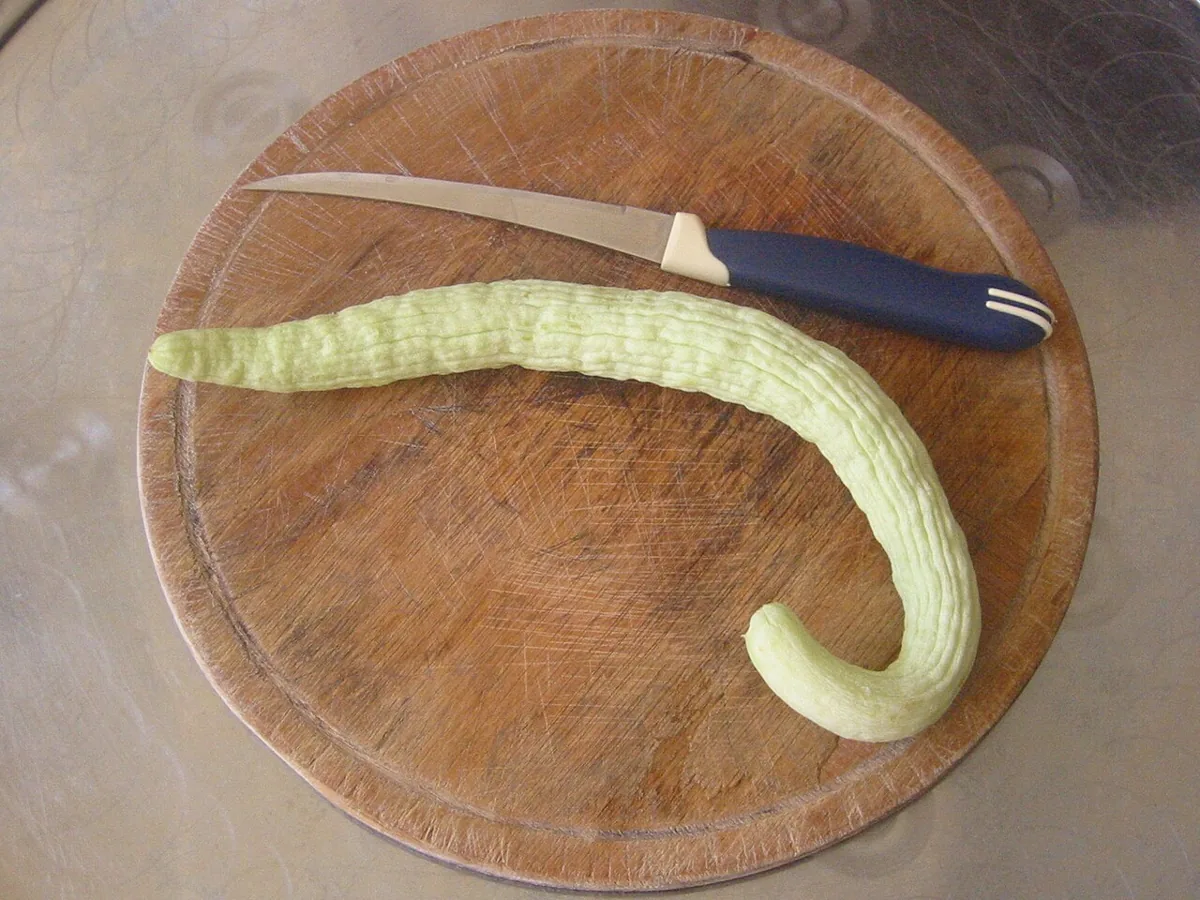
 June–September in Turkey (approximate harvest period)
Armenian Cucumber (Acur) Nutrition Facts, Vitamins and Benefits
Armenian Cucumber (Acur) (Cucumis melo var. flexuosus) is included in the Topraktan Bilgiler vegetable library. Per 100 g it provides approximately 15.9 kcal and includes 170 mg potassium, 10.1 mg magnesium, 16.3 mg calcium. Values can vary with variety, ripeness, growing conditions and preparation.
Armenian Cucumber (Acur) benefits and place in a balanced diet
- A 100 g portion provides approximately 15.9 kcal; portion size and preparation affect total energy intake.
- Its approximately 95.9 g of water per 100 g contributes to total fluid intake.
- About 24 µg of vitamin K per 100 g contributes to normal blood clotting and the maintenance of normal bones.
- About 16.3 mg of calcium per 100 g contributes to the maintenance of normal bones and teeth, muscle function and nerve transmission.
- About 170 mg of potassium per 100 g contributes to normal muscle and nervous-system function and the maintenance of normal blood pressure.
- About 10.1 mg of magnesium per 100 g contributes to normal energy metabolism and muscle and nervous-system function.
- About 23.2 mg of phosphorus per 100 g contributes to normal energy metabolism and the maintenance of normal bones and teeth.
- No single food prevents or treats disease. The nutritional value of armenian cucumber (acur) depends on portion size, variety, ripeness and the overall eating pattern.
Armenian Cucumber (Acur) nutrition facts
The table covers calories, macronutrients, vitamins, minerals, fatty acids and amino acids where a measured value is available. Values are shown per 100 g and for a 100 g reference serving.
| Nutrient | Per 100 g | 100 g serving |
|---|---|---|
| Core values and macronutrients | ||
| Energy | 15.9 kcal | 15.9 kcal |
| Water | 95.9 g | 95.9 g |
| Protein | 0.625 g | 0.625 g |
| Total fat | 0.178 g | 0.178 g |
| Carbohydrate | 3 g | 3 g |
| Ash | 0.375 g | 0.375 g |
| Minerals | ||
| Calcium | 16.3 mg | 16.3 mg |
| Iron | 0 mg | 0 mg |
| Magnesium | 10.1 mg | 10.1 mg |
| Phosphorus | 23.2 mg | 23.2 mg |
| Potassium | 170 mg | 170 mg |
| Sodium | 1.5 mg | 1.5 mg |
| Zinc | 0.204 mg | 0.204 mg |
| Copper | 0.063 mg | 0.063 mg |
| Manganese | 0.085 mg | 0.085 mg |
| Molybdenum | 3.7 µg | 3.7 µg |
| Vitamins and vitamin-like compounds | ||
| Vitamin B7 (Biotin) | 0.962 µg | 0.962 µg |
| Vitamin K | 24 µg | 24 µg |
| Vitamin details | ||
| Vitamin K1 (Phylloquinone) | 24 µg | 24 µg |
| Vitamin K2 (Menaquinone) | 0 µg | 0 µg |
How many calories are in Armenian Cucumber (Acur)?
100 g (about 3.5 oz) provides approximately 15.9 kcal. A 100 g reference serving provides approximately 15.9 kcal. Values vary with variety, ripeness and preparation.
How to use Armenian Cucumber (Acur) in the kitchen
Armenian Cucumber (Acur) can be used raw when food-safe or prepared by steaming, roasting, sautéing, simmering or adding to soups and salads, depending on the ingredient.
Related vegetables
Direct USDA records are used where available; closest-profile entries are explicitly labelled and remain approximate. Blank fields mean that the source did not report a value. General information only; not medical advice. Primary composition reference: USDA FoodData Central.